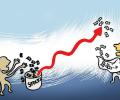
Small stocks made a dashing comeback in 2020 after delivering negative returns in the last two years as increased retail investor participation in pandemic times saw small-cap index surging up to 31 per cent and outperforming the bigger benchmark gauge. This year turned out to be eventful for the equity market, witnessing bearish and bullish sentiments at different points of time. While the initial part of COVID-ravaged 2020 saw the bears in full force amid concerns related to the pandemic and lockdowns hurting economic activities, bulls made a comeback towards the latter half of the year. As the market swayed with many lows as well as highs, small and mid-cap indices emerged as markets favourites in 2020.
The 30-share Sensex ended up 8 points at 27,508 and the 50-share Nifty closed 1 point higher at 8,284.

US stocks rose more than 1% on Tuesday, with the S&P 500 coming less than 2% below its record peak set last month.

The Sensex ended down 251 points at 27,351 and the Nifty shed 65 points to close at 8,228.

With commodity markets remaining soft and uncertain, it is likely the money will flow into equity markets with strong upsides, such as India.

The S&P BSE Sensex ended up 129 points at 26,843 and the Nifty50 ended up 39 points at 8,220.
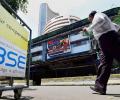
Of the 30-share Sensex pack, 22 ended with losses while NTPC ended flat at Rs 127.30.
While some companies used that to become world leaders, others squandered it by over-borrowing.

HUL, ITC, Nestle, Colgate, Dabur, Britannia, Asian Paints, P&G are trading at nearly 48 times. The previous record high was 53 times at the end of March 1994.

Sensex falls at close; metals, banks perform well.

Investors booked profit ahead of the outcome of the two-day US Fed policy meet which begins today.

The top gainers on the Sensex were Cipla, Bharti Airtel, Maruti Suzuki, Hero Moto & Sesa Sterlite.
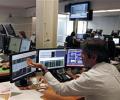
Auto stocks Hero MotoCorp and Mahindra & Mahindra gained 1-2 per cent on the back of strong sales in the month of September.
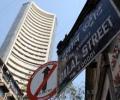
The Sensex ended below 28,000 for the second straight day at 27,869.

The markets have been unable to sustain at higher levels as a rise in bond yields globally, especially in the US have dented sentiment. Surging commodity prices, especially crude oil that have now hit $70 a barrel (Brent) coupled with inflation woes and fear of sporadic lockdown across major economic hubs back home as Covid cases rise have chased the bulls away. In the short-term, analysts expect the markets to remain volatile as they react to news flow - both from overseas and developments back home. Investors, they say, need to keep a tab on how the US treasury yields move, which in turn will have a ripple effect on how big money moves across developed (DMs) and emerging markets (EMs), including India.
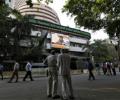
Benchmark share indices ended lower for the third straight session as investors turned cautious amid tensions in Iraq even as consumer durables shares stole the limelight tracking rally in gold prices.

The broader NSE Nifty closed below the 10,600 mark by plunging 98.15 points, or 0.84 per cent, to 11,582.35 after shuttling between 11,567.40 and 11,751.80.
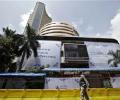
Sensex ended up 190 points at 25,519 and Nifty climbed 57 points to end at 7,626.
Sensex gained over 100 points and ended at 26147.33 while the Nifty ended 27 points higher at 7,795.75.
Aviation companies were in focus with all the three airliners SpiceJet, InterGlobe Aviation and Jet Airways adding in the range of 2% to 3% on the BSE

Sensex was up 184 points at 25,580 and the Nifty added 71 points to end the day at 7,654

Most of the session's gains for both the indices were wiped out as investors rushed to book profits ahead of F&O expiry on Thursday and also due to concerns over stretched valuations.

Participants are eyeing the Bihar elections.

In Friday's market rally post the corporate tax cut, the country's top business promoters recouped more than two-thirds of the losses that they suffered in the post-Budget sell-off in equity markets.

A weaker rupee could aid corporate earnings through its positive impact on export intensive sectors such as information technology services, pharmaceuticals and commodity producers such as metal and mining, and oil and gas companies.
.jpg)
BSE auto index surged 2%, capital goods, healthcare and oil & gas indices also up.

Metal stocks fell on Tuesday, with the S&P BSE metal index sliding 2.8 per cent compared to the 0.64 per cent fall in the benchmark S&P BSE Sensex

Historically, it is only the third time funds raised through IPOs has crossed the Rs 10k-crore mark

The broad-based NSE Nifty rose 52.80 points, or 0.50 per cent, to end at 10,530.70

ITC, Sun Pharma, HDFC and Coal India were among the top gainers.

The BSE Mid-Cap index was currently up 0.83%. The BSE Small-Cap index was currently up 0.8%.
Asian markets were trading mixed with shares in China witnessing profit taking after sharp gains in the previous session.

Sensex witnessed the biggest single day gain since May 2009 in absolute terms.

The 30-share Sensex ended higher by 31 points at 26,591 and the 50-share Nifty gained 10 points at 8,061.

Auto, pharma, IT, chemicals among sectors with significant reliance on UK and European nations with Tata Motors, Motherson Sumi, Tata Steel, TCS, Wipro, Infosys and Tech M among key names.

A fall presents an opportunity to buy rate-sensitive stocks.
Jindal Steel and Power was the top loser down 10% followed by Hindalco, Tata Steel, Tata Power which ended down between 0.5-3% each.

Ajit Mishra, vice president, research, Religare Broking, answers your queries.

market rally, especially in mid-caps, has also been driven by a pick-up in the monsoon and the government's resolve to get the goods and services tax (GST) Bill cleared in the recent session of Parliament.

The breadth, indicating strength of the market was strong
 © 2026 Rediff.com - Advertise with us - Disclaimer - Privacy Policy - Sitemap - Feedback - About us - Terms of use - Grievances